If you are wondering how early to get to LAX, the short answer is that it depends on three things: whether you are flying domestic or international, how far you are coming from, and whether you are checking bags. Most travelers should plan to be inside the terminal well before their boarding time, then work backward from there to set their pickup time.
LAX is one of the busiest airports in the country, and the horseshoe-shaped terminal loop is the part that catches people out. Traffic on the approach roads, a slow crawl around the loop and a check-in line can each add time. This guide explains how to think about your buffer, what drives the timing and how a pre-booked ride helps you control the one variable you can actually manage.
How Early to Get to LAX: The Short Answer
There is no single number that works for every flight, but the logic is simple: start with your airline's guidance, add time for the drive and the terminal loop, and build in a little slack. Airlines publish recommended check-in cutoffs and arrival windows on their websites, and those are the numbers to trust for your specific flight.
For a domestic flight with checked bags, most travelers aim to be at the curb with enough time to check in, clear security and reach the gate without rushing. For international flights, add more time for passport checks and the possibility of longer check-in lines. The exact buffer depends on the time of day, the day of the week and how busy the airport is.
The mistake people make is planning for the best case. If you assume a smooth drive and an empty security line, a single accident on the freeway or a backup at the loop can put you at your gate after boarding has started. Plan for a normal-to-busy day, not a perfect one.
Why the airline's guidance comes first
Airlines know their own check-in and boarding cutoffs, and those change by route and season. Check your airline's site or app for the recommended arrival window for your flight, then use this article to plan the ground side of the trip.
Domestic Versus International: Different Buffers
Domestic and international departures at LAX are not the same trip, even if you are leaving from the same terminal complex. International flights usually involve document checks at check-in, and some airlines close their counters earlier relative to departure. If you are flying internationally, give yourself more room than you would for a domestic hop.
For domestic flights, the main variables are checked bags and security. If you are traveling with only a carry-on and have checked in on your phone, you can often move through faster. If you are checking bags, you need to allow for the counter line, which can be long at peak times.
International travelers should also think about what happens after landing, not just departure. If you are being picked up on arrival, a chauffeur who tracks your flight can adjust to a delayed landing or a slow walk through customs. The same planning that gets you to the airport on time makes the return smoother.
Domestic with carry-on only: The lightest buffer, since you can go straight to security.
Domestic with checked bags: Add time for the check-in counter line.
International departure: Add time for document checks and earlier counter cutoffs.
Peak travel days: Add extra buffer for longer lines everywhere.
Traffic From the Westside, the Valley and Downtown
How early to get to LAX depends heavily on where you are starting. The airport sits near the coast at the edge of the Westside, and the freeways that feed it, the 405, the 105, the 110 and Lincoln Boulevard, all have their own rhythms. A drive that takes a short time at midday can take much longer during rush hour.
From the Westside, including Santa Monica, Venice and Beverly Hills, you are usually close in miles but can still hit heavy traffic on the 405 or on Sepulveda Boulevard. From the San Fernando Valley, the Sepulveda Pass is the classic bottleneck. From downtown Los Angeles, the 110 freeway leads toward the airport, and the merge into the terminal area can back up.
The lesson is to plan by time of day, not just distance. A morning departure means competing with commuters, and an evening flight means the afternoon build-up. If your trip starts with a chauffeur pickup in Santa Monica or a Beverly Hills transfer, your driver can advise on the route and timing based on conditions that day.
| Starting area | Typical route | Approximate drive time |
|---|---|---|
| Santa Monica | Lincoln Boulevard or the 405 | About 20 to 35 minutes |
| Beverly Hills | The 405 or surface streets | About 25 to 40 minutes |
| Downtown Los Angeles | The 110 freeway | About 25 to 40 minutes |
| San Fernando Valley | Sepulveda Pass on the 405 | About 30 to 50 minutes |
| Long Beach | The 405 or the 110 | About 35 to 55 minutes |
The Terminal Loop and Why It Slows You Down
LAX is built around a central terminal loop, a one-way horseshoe where cars drop off and pick up passengers. On busy days the loop can be congested, and the difference between a quick drop-off and a slow crawl is often just the hour you arrive. This is the part of the trip that is hardest to predict from a map.
Each airline operates from specific terminals, and the drop-off points are spread around the loop. If you are being dropped off, knowing your terminal in advance saves a lap. If you are driving yourself, factor in the time to park and reach the terminal, which can be longer than the drive itself on a busy morning.
A pre-booked LAX airport car service removes the parking variable entirely. Your chauffeur handles the loop and drops you at the right terminal, and on arrival a meet-and-greet option can put someone inside the terminal to help with bags. Always confirm your terminal on your airline's website before you leave, since terminal assignments can change.
Drop-off versus parking
Being dropped off means one pass around the loop. Driving yourself means finding parking, walking or taking a shuttle to the terminal, and repeating it on return. The second option almost always takes longer.
Arrivals are a different loop
Picking someone up at LAX has its own rules and designated areas. If you are the one being collected, a chauffeur who tracks the flight can time the pickup to your actual landing.
Checked Bags and Carry-On Only
Checked bags change your timing more than most people expect. If you are checking a bag, you need to reach the counter before it closes, and the line can be the slowest part of the airport. If you are traveling with only a carry-on and have already checked in on your phone, you can often go straight to security.
Think about the return trip too. On the way home, you will wait at baggage claim, which adds time before you reach your ride. A chauffeur waiting for you can absorb that delay, but a self-arranged pickup or a parked car cannot.
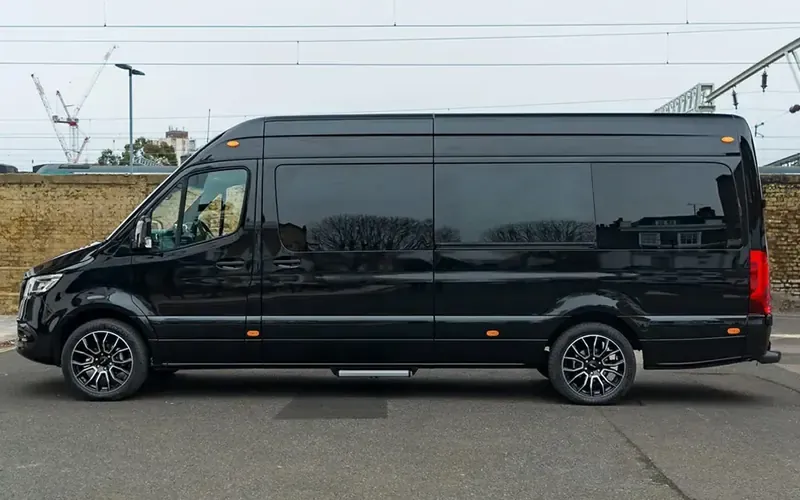
If you are traveling with a group, checked bags multiply. A family with several suitcases needs a vehicle that fits them and a little more time at the curb. An executive SUV or a Mercedes Sprinter gives everyone room and keeps the loading and unloading quick.
Building Your Own LAX Timeline
Once you know your airline's recommended arrival window, you can build a timeline backward. Start with the time you want to be at the gate, add time for security, add time for check-in if you are checking bags, add time for the terminal loop, and add the drive. What is left is your pickup time.
A written timeline helps, especially for early-morning flights when everything is less forgiving. Write down your flight time, your airline's guidance, your terminal and your pickup time, and share it with whoever is driving you.
Here is a simple way to structure it:
Confirm the flight details: Airline, terminal and departure time from your booking.
Check the airline's guidance: Use its recommended arrival window for your route.
Add security and bag time: More if you are checking bags or traveling internationally.
Add the terminal loop: A cushion for congestion around the horseshoe.
Add the drive: Based on your starting area and the time of day.
Set the pickup: Work backward so you arrive with slack, not exactly on time.
When a Chauffeur Makes the Timing Easier
The hardest part of getting to LAX on time is the uncertainty: traffic, the loop, the counter line. A pre-booked ride reduces that uncertainty because your transport is arranged in advance and priced as one flat, itemized quote before you book, with gratuity, tolls and fees listed separately.
Airport pickups are tracked to your flight, so a delay on the road or a slow landing does not leave you stranded. You can book at any hour, which matters for the early departures that require a pre-dawn pickup. And every booking includes a professional chauffeur who knows the airport approach.
For business travelers, a black car service keeps the trip predictable and lets you work or rest instead of watching the road. For a full day of meetings with an airport run in the middle, an hourly chauffeur keeps the vehicle with you. Either way, request a written quote so you can compare options clearly.
Mistakes That Make People Late for LAX
Most missed flights at LAX come down to a few repeat mistakes. The first is planning for light traffic on a day that turns out busy. The second is assuming the terminal loop will be quick. The third is leaving the bag check to the last minute.
Another common one is going to the wrong terminal, which can cost a full lap around the loop. Terminal assignments change, so check yours on the airline's site the day before you fly. If you are unsure, ask your chauffeur to confirm the drop-off point.
Finally, do not cut your buffer to save a few minutes on the pickup. The whole point of planning how early to get to LAX is to arrive calm. A little slack at the start of the trip is worth far more than a rushed sprint through the terminal.
Planning for best-case traffic: Assume a normal-to-busy day instead.
Ignoring the terminal loop: Add a cushion for congestion around the horseshoe.
Going to the wrong terminal: Confirm yours the day before.
Cutting the buffer too fine: Leave slack so a delay does not cost you the flight.
Not tracking the flight: Use a service that adjusts to delays.
Planning the Return Trip
The same logic applies when you land. After a long flight, you want a ride that is already arranged, not a search for a car at the curb. If you are being picked up, a chauffeur who tracks your flight can time the arrival to your actual landing.
If you are heading to a hotel or a meeting, tell your driver in advance so the route is planned. If you are connecting to another city, a long-distance car service can take you the rest of the way without a second airport trip.
For travelers continuing south toward Orange County or San Diego, the drive from LAX can be significant. Booking the whole trip as one ride is often simpler than piecing it together at the curb. Ask for a written quote that covers the full route.
A Simple Checklist Before You Leave
Before you head to the airport, run through a short checklist. Confirm your flight and terminal, check your airline's arrival guidance, and decide whether you are checking bags. Then set your pickup time with buffer for the drive and the loop.
If you are booking a ride, do it early enough that you have your confirmation in hand. Confirm the pickup location and the vehicle, and share your flight number so the driver can track it. On the day, leave when you planned to leave, not when you feel ready.
That is the practical answer to how early to get to LAX: follow your airline's guidance, add buffer for traffic and the terminal loop, and let a pre-booked chauffeur handle the ground side so you can focus on the flight.
Frequently asked questions
How early should I get to LAX for a domestic flight?
Follow your airline's recommended arrival window, then add buffer for the drive and the terminal loop. If you are checking bags or traveling at a busy time, give yourself more room. The exact number depends on your flight, the day and the traffic.
How early should I get to LAX for an international flight?
International flights usually need more time than domestic ones because of document checks and earlier counter cutoffs. Check your airline's guidance for your specific route and add extra buffer for the drive and the terminal loop.
How long does it take to get to LAX from Santa Monica or Beverly Hills?
The drive is usually short in miles but can vary a lot with traffic. From Santa Monica or Beverly Hills, plan for roughly half an hour or more during busy periods. Check conditions on the day and leave earlier than the map suggests.
Why is the LAX terminal loop so slow?
The central loop is a one-way horseshoe where all drop-offs and pickups happen, so it can back up at peak times. Knowing your terminal in advance helps, and being dropped off by a chauffeur avoids the parking step entirely.
Should I check bags or carry on to save time at LAX?
Carry-on only is usually faster if you have checked in on your phone, since you can go straight to security. If you are checking bags, allow time for the counter line, which can be the slowest part of the airport at busy times.
Does a chauffeur service help with LAX timing?
Yes. A pre-booked ride is arranged in advance, priced as one flat quote, and airport pickups are tracked to your flight. Your chauffeur handles the terminal loop so you do not have to park or navigate the drop-off yourself.
What if my flight is delayed or I land early?
A chauffeur service that tracks your flight can adjust the pickup to your actual landing time. Share your flight number when you book so the driver can monitor it and time the arrival.