If you are landing at San Francisco International from another country, the airport works differently than it does for a domestic trip. On sfo international arrivals, you clear U.S. Customs and Border Protection, collect your bags, and then exit into a public area where your ground transportation is waiting. Knowing the order of those steps takes most of the guesswork out of the first hour after you land.
This guide walks through the International Terminal, the arrivals process, where a professional chauffeur meets you, and what the drive into San Francisco or down the Peninsula looks like. It also covers what to have ready before you reach the passport desk and how to plan a pickup that does not depend on you guessing how long clearance will take.
How sfo international arrivals are structured
San Francisco International sits about 13 miles south of downtown San Francisco, just off U.S. 101 in San Mateo County. It has several terminals, and the one that matters for an international flight is the International Terminal, which handles both arrivals and departures. Some international carriers also operate from other boarding areas, so the terminal printed on your ticket is worth checking rather than assuming.
After you step off the plane, you follow signs for arrivals and passport control. International arrivals at SFO are separated from the domestic flow, which means you generally do not mix with travelers who are simply changing planes domestically. The airport's own website lists current terminal information and any service changes, and it is the best place to confirm details before you fly.
The International Terminal
The International Terminal is the largest in the airport and is split into two boarding areas, A and B. Arriving passengers are routed through a dedicated arrivals hall that leads to federal inspection and then baggage claim.
Connecting to other terminals
If your trip continues on a domestic flight, there are walkways and the AirTrain people mover connecting the terminals. Allow extra time for the connection, since you will clear customs before you can move to a domestic gate.
Customs and border clearance at SFO
U.S. Customs and Border Protection processes arriving international passengers at SFO. The order is generally passport and visa check first, then baggage claim, then a customs declaration before you exit. Many travelers are now directed to automated passport kiosks or mobile entry programs before they reach an officer, which can speed things up, but eligibility depends on your nationality and travel history.
Have your passport, any required visa or travel authorization, and a completed customs declaration ready. If you are traveling with family, keep everyone together through the line. Officers may ask about the purpose of your trip, how long you are staying, and what you are bringing in, so short, direct answers are best.
This guide is general information, not legal advice. Entry requirements change, so confirm current rules with U.S. Customs and Border Protection or your airline before you travel.
Passport control: Present your passport and any visa or travel authorization to the officer.
Automated kiosks: Use them only if you are eligible and directed to do so.
Baggage claim: Collect every checked bag before the customs exit, even if you are connecting.
Customs declaration: Hand in your form and declare any goods, food, or currency as required.
Exit to arrivals: Follow signs to the public hall where drivers and greeters wait.
Baggage claim and the exit into the arrivals hall
Baggage claim for international flights sits inside the secure arrivals area, before the customs exit. Belt numbers are posted on screens, and oversized or special items usually come out at a separate location staffed by the airline. If a bag does not appear, file a report with your airline's baggage desk before you leave the hall, since it is much harder to resolve later.
Once you hand in your customs declaration, you pass through the doors into the public arrivals hall. This is where you will find greeters, drivers, information desks, and ground transportation signs. It is also where the crowds are thickest, so having a clear plan for where to meet your driver saves a lot of wandering with luggage.
If you are connecting onward
Travelers continuing to another U.S. city usually re-check bags at a designated transfer point after customs, then go through security again. Build a comfortable buffer into your connection rather than booking the tightest possible one.
Currency, SIM cards and essentials
The arrivals hall has service counters for currency exchange and mobile connectivity. Sort these out after you have met your driver or confirmed your pickup point, not while standing in the exit lane.
Meeting your chauffeur after you clear customs
The most stressful part of sfo international arrivals for many travelers is the moment they walk out and cannot find their ride. A pre-booked SFO airport car service solves that by tracking your flight and adjusting to an early or late landing. Your chauffeur knows the flight number, so a long line at passport control does not leave you stranded.
With a meet and greet, the chauffeur waits inside the arrivals hall with a name sign, helps with luggage, and walks you out to the vehicle. Without it, you typically meet curbside or in a designated pickup zone after a short walk. Either way, you get a confirmation with the meeting point and the driver's details before you fly, so you are not hunting for a car in an unfamiliar terminal.
Bookings can be made for any hour, which matters for long-haul flights that land late at night or early in the morning when other options are thin.
Share your flight number: This is what lets the driver track the arrival and adjust.
Confirm the meeting point: Know whether you are meeting inside the hall or at the curb.
Keep your phone reachable: Turn off airplane mode once you are through customs.
Have the confirmation handy: A screenshot works if you have no data yet.
Let the driver handle bags: Chauffeurs expect to help, so accept it after a long flight.
Choosing the right vehicle for your arrival
The right vehicle depends on how many people are traveling and how much luggage you have. International trips usually mean checked bags, so a sedan that fits three people comfortably may not fit three people plus six suitcases. Be honest about bag counts when you book, and the quote will reflect a vehicle that actually works.
Every booking includes a professional chauffeur, and the price is quoted as one flat, itemized figure before you book, with gratuity, tolls, and fees listed separately. That makes it easier to compare against other options than a base rate that grows at the end.
| Vehicle | Passengers | Best for |
|---|---|---|
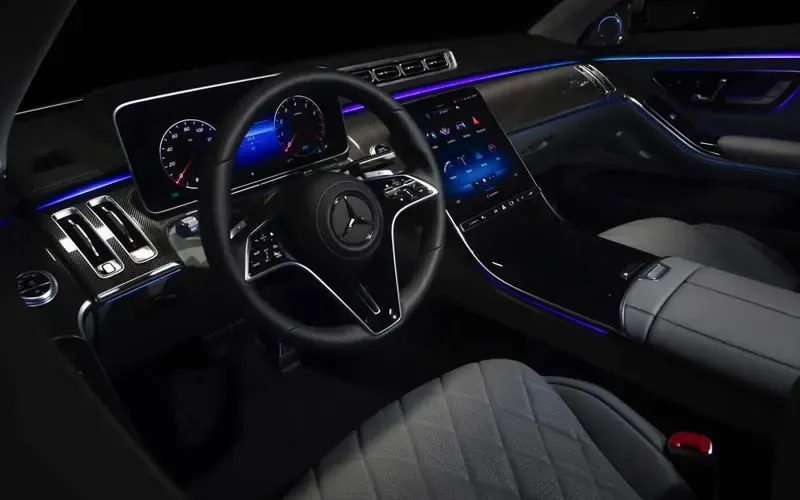
| Luxury Sedan | Up to 3 | Solo travelers, couples, business arrivals |
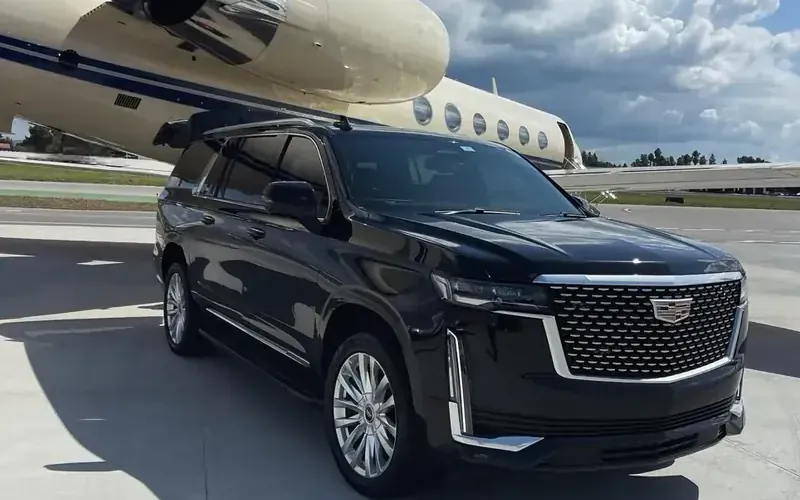
| Executive SUV | Up to 6 | Families with several checked bags |
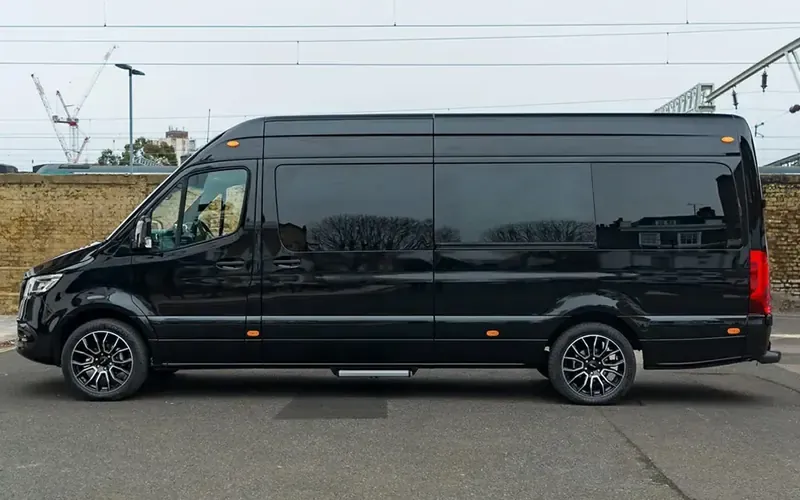
| Mercedes Sprinter | Up to 10–14 | Groups arriving together, corporate teams |
| Stretch Limousine | 8–10 | Special occasions and celebrations |
| Mini Bus Shuttle | 20–30 | Conference groups and large parties |
The drive into San Francisco and down the Peninsula
From the International Terminal, the drive north on U.S. 101 into downtown San Francisco is usually about 20 to 30 minutes outside peak traffic. During the morning and evening rush, or when there is a game or event downtown, it can take noticeably longer. Your chauffeur will choose the route based on live conditions rather than a fixed plan.
Heading south instead, the Peninsula cities of Burlingame, San Mateo, Redwood City, and Palo Alto are all a short drive down 101. San Jose and the South Bay are typically under an hour in normal traffic via 101 or Interstate 280. If your final destination is in the East Bay, the route usually crosses the San Mateo or Bay Bridge, and the toll is listed separately on your quote.
Staying in the city
Hotels around Union Square, Nob Hill, the Embarcadero, and SoMa are all a straightforward drive from SFO. If you are continuing to a San Francisco limo service booking for a meeting or event, tell the dispatcher your hotel so the pickup point is clear.
Continuing to the South Bay
Travelers heading to San Jose, Santa Clara, or the tech campuses along the Peninsula can book a San Jose car service directly from the airport, which avoids a transfer in the city.
Planning your pickup before you fly
The single best thing you can do for a smooth arrival is to arrange ground transportation before you leave home. Landing after a long flight and then comparing options in the arrivals hall, with luggage and no local phone plan, is the worst time to make that decision. A pre-booked ride means the only thing left to do is walk out and find your name.
Give the booking team your flight number, arrival date, destination address, passenger count, and bag count. If you are being met by someone else, add their name so the chauffeur can greet the right person. Note any special needs, such as a child seat or extra luggage space, at the time of booking rather than on the day.
Pricing is quoted per trip, so ask for a written quote if you want to compare options. Confirm current terminal details and any airport service notices on SFO's official website before you travel.
Book in advance: Reserve before you fly, especially for late-night or early-morning landings.
Send the flight number: This lets the driver track the arrival and adjust for delays.
State your bag count: It determines whether a sedan or SUV is the right fit.
Confirm the meeting point: Know whether to look for a name sign or a curbside spot.
Save the confirmation: Screenshot the driver details in case you have no data on landing.
Common mistakes to avoid on arrival day
Most arrival problems come from small oversights rather than anything dramatic. Travelers forget that they must collect checked bags before clearing customs, even when connecting to another flight. Others book a sedan for a family of four with a mountain of luggage and then have to sort out a second vehicle at the curb.
Another common one is assuming the driver knows where you are standing. In a busy arrivals hall, a name sign only works if you are looking for it in the right place. Read your confirmation, note the meeting point, and call or message the driver if you cannot find each other. Chauffeurs do this every day and will help you sort it out quickly.
Finally, do not schedule a tight onward commitment on arrival day. Clearance, baggage, and traffic can all run longer than expected, and a little slack at the start of a trip pays off.
| Stage | Have ready |
|---|---|
| Passport control | Passport, visa or travel authorization, arrival form |
| Automated kiosks | Same documents, plus fingerprints if directed |
| Baggage claim | Bag tags and a description of each checked bag |
| Customs exit | Completed declaration and any receipts for goods |
| Arrivals hall | Phone on, booking confirmation, driver contact |
Frequently asked questions about sfo international arrivals
These are the questions travelers ask most often when planning a pickup after an international flight into San Francisco.
Frequently asked questions
Which terminal do international flights arrive at in San Francisco?
Most international arrivals use the International Terminal, which has separate boarding areas for different carriers. A small number of international flights operate from other terminals. Check the terminal on your ticket and confirm on the airport's official website before you travel.
Do I have to collect my bags before clearing customs at SFO?
Yes. International arrivals collect checked baggage and pass through customs before exiting to the public hall, even if they are connecting to another flight. If you are continuing onward, you will typically re-check your bags at a transfer point after customs.
How long does it take to get through customs at SFO?
It varies with the number of arriving flights, staffing, and your nationality. Rather than plan around a fixed time, book a driver who tracks your flight and builds in flexibility. You can check current conditions on the airport's site.
Where does my chauffeur meet me after I clear customs?
With a meet and greet, the chauffeur waits inside the arrivals hall with a name sign. Otherwise you meet at a designated curbside or pickup area. Your booking confirmation states the meeting point, so read it before you land.
How long is the drive from SFO into downtown San Francisco?
Usually about 20 to 30 minutes outside peak traffic. Rush hour, events downtown, and weather can all add time. Your chauffeur will pick the route based on live conditions on the day.
Can I book a ride if my flight lands late at night?
Yes. Bookings can be made for any hour, and a flight-tracked pickup adjusts if your arrival runs early or late. Share your flight number when you book so the driver can follow it.
What vehicle should I book for a family with a lot of luggage?
An Executive SUV usually fits up to six passengers with several checked bags, while a Mercedes Sprinter suits larger groups. Give your bag count when you request a quote and the right vehicle will be confirmed for you.