Silicon Valley executive transportation is chauffeured car service built around a working day: a flight landing at SJC or SFO, a run down US-101 or I-280 to a meeting, several stops across Palo Alto, Mountain View, Cupertino and Santa Clara, and a car that waits instead of leaving. The point is not luxury for its own sake. It is a schedule that holds when traffic does not.
This guide covers how the trips usually work, which airports make sense for which meetings, how the main freeways shape your timing, and how to structure a full-day booking so your driver, your luggage and your next appointment are all where they should be. Every trip is quoted as one flat, itemized price before you book, with gratuity, tolls and fees listed separately.
How Silicon Valley executive transportation is structured
Executive travel here rarely means a single point-to-point ride. A typical day is an airport pickup, a hotel drop, two or three meetings across different cities, a dinner, and a return to the airport the next morning. That shape is why most Silicon Valley car service bookings are either hourly or split into a small number of scheduled transfers.
With an hourly booking, you keep the car and chauffeur for a block of time and move between stops as your schedule shifts. With point-to-point transfers, each leg is priced on its own and the car leaves after the drop. If your calendar has any chance of moving, the hourly structure is usually the calmer choice.
Either way, you get a professional chauffeur, a confirmed vehicle, and a quote agreed before the trip rather than a meter running at the curb. For a closer look at the vehicle tiers, see the executive car service options.
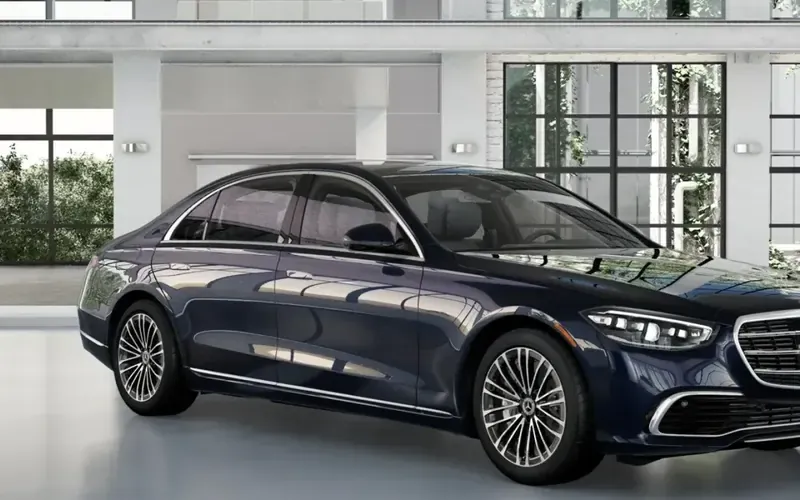
Luxury Sedan: Up to 3 passengers, the default for one executive and carry-on luggage.
Executive SUV: Up to 6 passengers, useful for a small team or extra bags.
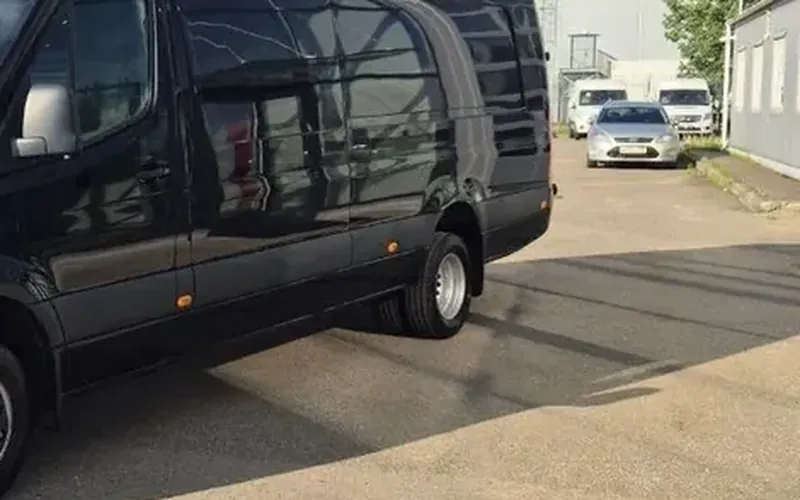
Mercedes Sprinter: 10 to 14 passengers, common for a visiting group or a roadshow team.
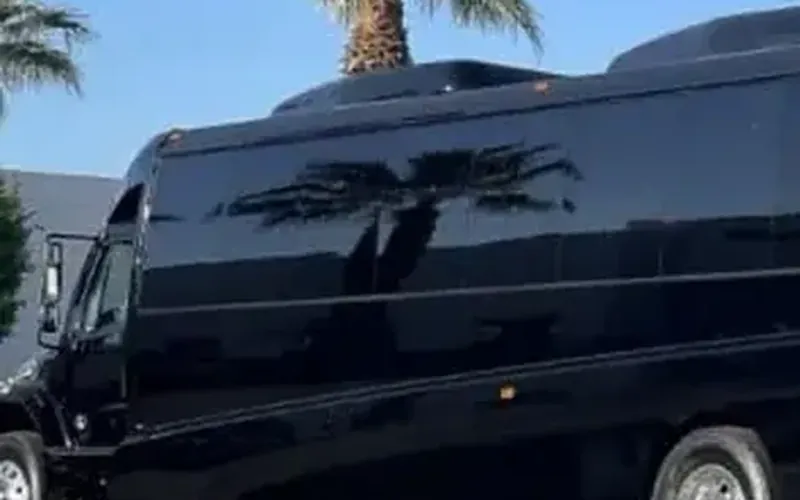
Mini Bus Shuttle: 20 to 30 passengers, used for larger offsites and conference shuttles.
Arriving at SJC: the closest airport to most meetings
Norman Y. Mineta San Jose International Airport sits at the north edge of downtown San Jose, which makes it the most convenient arrival for meetings in Santa Clara, Sunnyvale, Cupertino and Palo Alto. From the terminal to most of those addresses is usually a short drive, often under half an hour outside peak traffic.
SJC has two terminals, and which one you use depends on your airline. Confirm the terminal on your booking confirmation rather than from memory, since carriers occasionally shift. Your chauffeur tracks your flight, so if you land early or late, the pickup adjusts.
For arrivals, the practical details are the same as at any major airport: collect your bags, follow signs to the designated passenger pickup area, and meet your driver at the agreed spot. If you want someone inside the terminal with a name sign, ask for meet and greet when you book. More on the airport itself is in the SJC airport car service guide.
Curbside vs. meet and greet
Curbside pickup is faster if you know the airport and travel light. Meet and greet costs more of your driver's time but saves you when you are landing on a long-haul flight, carrying samples, or arriving somewhere unfamiliar.
Arriving at SFO: more flights, a longer transfer
San Francisco International has far more nonstop routes than SJC, so many executives flying in from the East Coast or overseas land there and drive south. The transfer from SFO to Palo Alto, Mountain View or Cupertino is usually around 45 minutes to an hour in normal traffic, and longer during the morning and evening peaks.
The route south typically runs down US-101, with I-280 as the alternative. Which is faster depends on the time of day and where exactly you are going. A chauffeur who drives the corridor daily will make that call in real time rather than following a fixed plan.
SFO's international arrivals involve a longer walk from the gate through customs and baggage claim, so build that into your schedule. If you are meeting someone, arrange the pickup point in advance. The SFO airport car service page covers terminal logistics in more detail.
| Destination | Closest airport | Typical drive |
|---|---|---|
| San Jose, Santa Clara | SJC | Short, often under 30 minutes |
| Sunnyvale, Mountain View | SJC or SFO | SJC shorter; SFO usually 45–60 minutes |
| Palo Alto, Menlo Park | SJC or SFO | SJC shorter; SFO usually 45–60 minutes |
| Cupertino | SJC | Usually under 30 minutes |
| San Francisco | SFO | Usually 20–40 minutes |
US-101 and I-280: how the freeways shape your day
Two freeways carry most Silicon Valley executive travel. US-101 runs the length of the valley from San Francisco through San Jose and on toward Gilroy, passing the campuses and office parks in Brisbane, Palo Alto, Mountain View, Sunnyvale and Santa Clara. I-280 runs parallel to the west, through the hills, and is generally quieter and more scenic.
The trade-off is simple. US-101 puts you closer to most business addresses but is the first to jam. I-280 has fewer exits near the office parks but often moves better when 101 is locked up. A good chauffeur chooses between them based on the time of day and your destination, not habit.
Traffic patterns here follow the commute: southbound in the morning, northbound in the evening, with congestion around the major interchanges. Add slack to any appointment that requires crossing the valley at peak times, and avoid scheduling back-to-back meetings in Palo Alto and San Jose with only a few minutes between them.
Beyond the two main freeways, expect to use CA-85 and CA-237 for east-west and cross-valley trips, and I-880 for the East Bay. Tolls apply on some bay crossings, and those are itemized separately on your quote.
Campus visits in Palo Alto, Mountain View, Cupertino and Santa Clara
Much of the executive travel in this region is campus-to-campus. A visitor might land at SJC, stop at an office in Santa Clara, drive to a meeting in Mountain View, cross to Cupertino, then head north to Palo Alto for dinner. Each leg is short on paper and slow in practice once parking and security are involved.
A chauffeured car removes the parking problem entirely. Many large campuses have visitor parking with gates, permits or limited spaces, and drop-off points that differ from employee entrances. Ask your host in advance which entrance and which visitor procedure applies, then pass that to your chauffeur.
Keep the day realistic. Two campuses in a morning plus a lunch is comfortable. Four is not, especially if any of them sit on opposite sides of the valley. If your schedule is dense, book the car hourly so it stays with you rather than being re-dispatched between stops. For city-specific detail, see the San Jose car service page.
Share the full address: Campus addresses often differ from the mailing address; give the building and entrance.
Ask about visitor check-in: Some sites require a host to register guests ahead of time.
Plan a meeting point: For large campuses, name a specific lobby or drop-off circle.
Build in buffer: Ten minutes between stops disappears quickly at shift change or lunch.
Full-day bookings for roadshows and board days
When a day involves investors, board meetings or a series of short presentations, a full-day chauffeur booking is usually the most efficient structure. The car stays with you, your bags stay in it, and you can take a call between stops instead of hunting for parking.
A full-day booking is priced on the vehicle and the hours reserved, so the shape of your day matters more than the miles. Tell the dispatcher your first pickup, your last drop, and the rough sequence in between. If a stop is likely to run long, say so. Extra time is easier to arrange when it is flagged in advance than when it appears at the end of the day.
For multi-day investor travel, the same car and chauffeur can be held across consecutive days, which keeps the logistics consistent. The corporate transportation service covers account-level arrangements, and the hourly chauffeur service explains how time blocks work.
Group travel for visiting teams
When a team flies in together, a Sprinter or mini bus keeps everyone on one schedule and one vehicle. That is simpler than coordinating several sedans across a day of meetings.
What a written quote should include
Silicon Valley executive transportation is quoted per trip, and the quote should be itemized before you commit. The vehicle type, the hours reserved, the pickup and drop addresses, and any extra stops all belong in writing. Gratuity, tolls and fees should appear as separate lines rather than being folded into a single number.
Ask about wait time as well. Airport pickups usually include a reasonable allowance after landing, and extra waiting is billed by the hour. For hourly bookings, confirm whether the clock starts at pickup or at the scheduled time, and what happens if your flight is delayed.
Finally, confirm the vehicle. Seat counts are typical, not guaranteed, and the exact car is confirmed on your quote. If the vehicle matters to you, say so when you book rather than assuming. This is general guidance, not a contract; your written quote is the document that governs the trip.
| Factor | Why it matters |
|---|---|
| Vehicle type | Sedan, SUV, Sprinter and mini bus carry different rates |
| Hours reserved | Hourly bookings price on time, not just distance |
| Distance and route | Long transfers and toll crossings add cost |
| Date and time | Peak days and late nights can carry minimums |
| Extra stops | Each additional stop adds time to the booking |
| Wait time | Airport and event waiting beyond the allowance is billed |
Booking, changes and the day itself
Bookings can be made at any hour, and changes are easiest when they arrive early. If a meeting moves, call or message as soon as you know. Re-routing a car that is already en route is harder than adjusting a schedule the night before.
On the day, keep your phone reachable. Your chauffeur may need to confirm a pickup point, especially at a campus with multiple entrances or a hotel with a busy porte-cochère. If you are running late, a quick message is better than silence.
For airport departures, build in the usual buffers: check-in and security at SJC and SFO both take time, and the drive to the airport can stretch during commute hours. Confirm current security wait times with the airport or TSA on the day rather than relying on a general rule.
If your trip involves a private terminal rather than a commercial airline, the arrangements differ and are covered under private jet and FBO car service.
Book early for peak weeks: Conference weeks and quarter-end fill calendars quickly.
Send the full itinerary: Addresses, entrances and contact numbers save time on the day.
Flag changes immediately: Earlier notice means a smoother adjustment.
Confirm the vehicle: Ask which car is assigned if it matters to your group.
Keep the quote handy: It lists what is included and what is billed separately.
Matching the vehicle to the trip
Most single executives travel in a sedan, which handles airport runs and single-stop meetings well. An SUV suits a traveler with extra luggage or a two-person team. For a group arriving together, a Sprinter keeps everyone in one vehicle and one conversation.
Larger groups, such as a visiting delegation or a conference shuttle, move to a mini bus. The right choice depends on passenger count, luggage volume and how much time you will spend in the car rather than at the destination.
If you are unsure, describe the trip and let the dispatcher recommend a vehicle. Seat counts are typical and the exact vehicle is confirmed on your quote, so there is no guesswork once the booking is set.
| Vehicle | Passengers | Best for |
|---|---|---|
| Luxury Sedan | Up to 3 | Solo executives, airport runs, date nights |
| Executive SUV | Up to 6 | Small teams, extra luggage |
| Mercedes Sprinter | 10 to 14 | Visiting groups, roadshows, wine tours |
| Mini Bus Shuttle | 20 to 30 | Conference shuttles, large delegations |
Planning the week around Silicon Valley traffic
The single biggest planning decision is when to move. Morning congestion runs southbound on US-101 and northbound on I-280 toward San Francisco. Evening reverses it. If your day includes a San Francisco meeting and a San Jose meeting, put the San Francisco stop in the middle of the day if you can, when the corridor is calmer.
Weather is rarely a factor, but incidents are. A single collision on US-101 can add significant time with little warning, which is why a chauffeured car with live routing is worth considering for tight schedules.
For multi-day visits, group your meetings by geography: one day in Palo Alto and Menlo Park, another in Santa Clara and San Jose, a third in Mountain View and Sunnyvale. That structure reduces windshield time and leaves room for the dinners and informal conversations that matter as much as the meetings.
If your trip extends to San Francisco or the coast, the same car can cover it. For broader coverage across the state, see the California locations page.
When to leave for the airport
Allow more time than a map suggests for departures during commute hours. Confirm security wait times with the airport or TSA on the day, and let your chauffeur know your airline and terminal.
Frequently asked questions
Is SJC or SFO better for Silicon Valley meetings?
SJC is usually closer to meetings in San Jose, Santa Clara, Sunnyvale and Cupertino, often a short drive from the terminal. SFO has more nonstop routes but adds roughly 45 minutes to an hour to reach the same addresses in normal traffic. Choose based on flight availability and where your first meeting is.
How does a full-day chauffeur booking work?
You reserve a vehicle and chauffeur for a block of hours, and the car stays with you between stops. The quote is based on the vehicle, the hours reserved and the itinerary, with gratuity, tolls and fees listed separately. It suits days with multiple campus visits or investor meetings.
Do you track flights for airport pickups?
Yes. Airport pickups are tracked to your flight, so an early or delayed arrival adjusts the pickup time. Wait time beyond the included allowance is billed, so confirm the details on your written quote before you book.
Can you handle a group arriving for a conference?
Yes. A Mercedes Sprinter works for a visiting team of roughly 10 to 14, and a mini bus covers larger delegations. Send the flight details, the hotel and the venue schedule, and the vehicles can be coordinated across the days of the event.
What should I give the dispatcher when booking?
Provide your flight numbers, full addresses with building entrances, the sequence of stops, and any fixed appointment times. If a meeting may run long, say so. The more detail you share, the more accurate the quote and the smoother the day.
Can the car wait while I am in a meeting?
Yes, on an hourly booking the chauffeur waits with the vehicle. That is the main reason executives choose hourly over separate transfers when they have several short meetings in one day.
Do you serve Palo Alto, Mountain View and Cupertino?
Yes. Campus visits and office parks across Palo Alto, Mountain View, Cupertino, Santa Clara, Sunnyvale and San Jose are routine. Give the specific building and entrance, since large campuses often have several drop-off points.